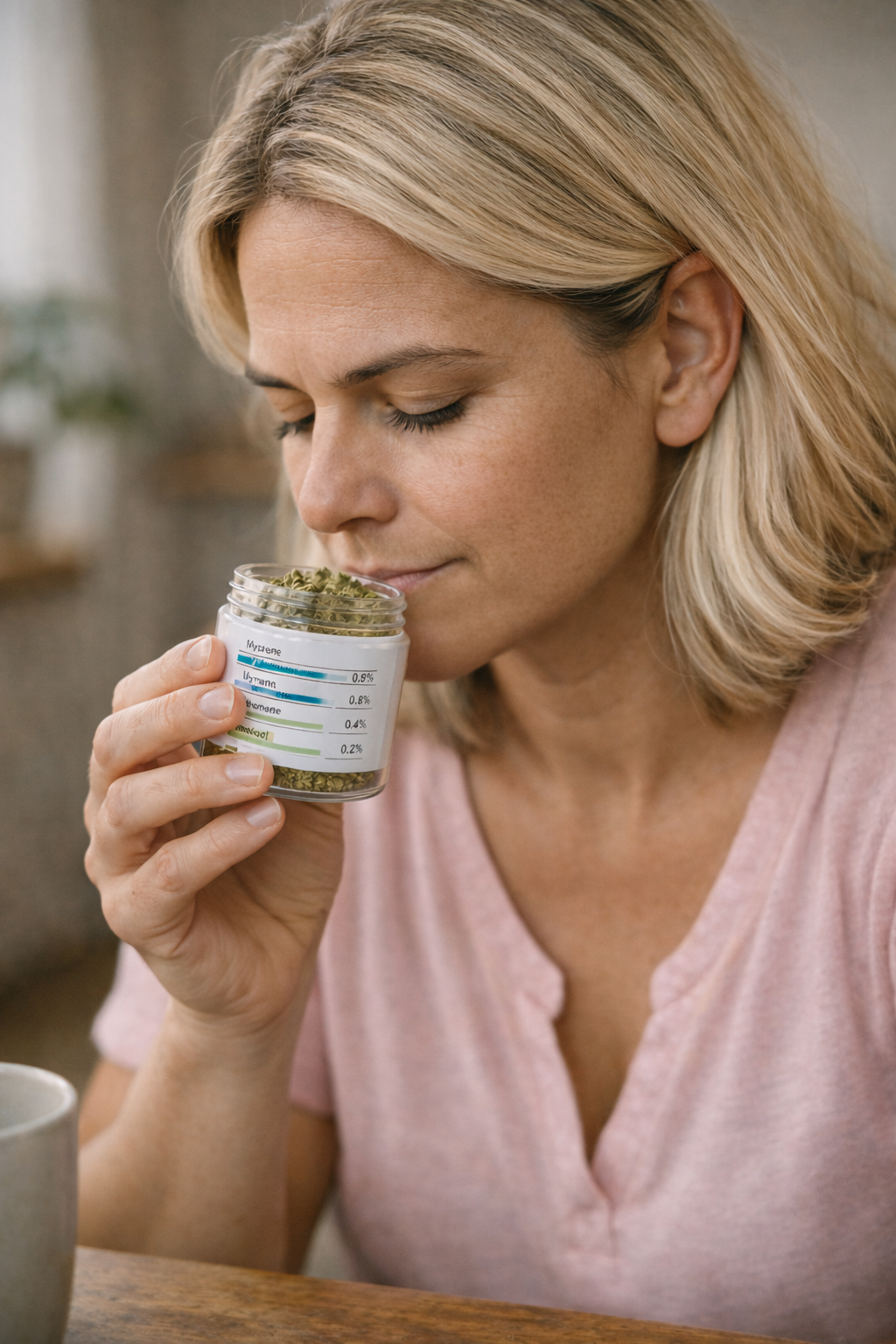
Once people learn that indica and sativa don’t reliably predict how cannabis will feel, they usually latch onto the next shiny thing. Terpenes.
Suddenly every label is a personality test. This terpene for sleep. That terpene for focus. This one for anxiety. That one for creativity. It starts to feel like Pokémon cards with mood promises.
That’s where we need to slow things down.
Terpenes matter, but they don’t work the way the internet tells you they do.
Terpenes are aromatic compounds found all over the plant world. They’re in citrus peels, pine trees, black pepper, lavender, and a lot of the foods you already eat. In cannabis, they’re responsible for smell and flavor, and they also influence how THC feels once it’s in your system.
That last part is important. Influence does not mean control.
Terpenes don’t get you high on their own. They don’t override dose. They don’t cancel tolerance. They don’t turn THC into a completely different drug. What they do is shape the experience at the edges.
Think of THC as the main signal and terpenes as the tone of that signal. Same volume, different texture.
This is why terpenes get overhyped so easily. People want a clean cause-and-effect story. “This terpene equals this feeling.” That’s comforting. It just isn’t how biology works.
What research and real-world use actually support is something softer but still useful. Certain terpene profiles tend to lean in certain directions for many people. Not everyone. Not every time. But often enough to notice patterns.
For example, cannabis high in myrcene often feels more body-heavy or calming. Limonene often feels brighter or more uplifting. Pinene can feel sharper or clearer. Linalool is often described as softer or more relaxing.
Those tendencies show up across users often enough that they’re worth paying attention to. But they’re not switches. They’re nudges.
This is where people get tripped up.
They see a terpene chart and assume it works like a prescription. Pick the terpene, get the result. When that doesn’t happen, they either think terpenes are fake or that cannabis is unpredictable.
Neither is true.
Terpenes work in context. Dose still matters more. Delivery method still matters more. Your mood, your tolerance, your environment, and your expectations still matter more.
Terpenes are part of the conversation, not the conclusion.
There’s also a practical limitation most people don’t realize. Terpene percentages in cannabis are small. Even when a terpene is “dominant,” it’s usually present in fractions of a percent. That doesn’t make it irrelevant, but it does mean it’s working subtly, not dramatically.
This is why chasing a single terpene rarely delivers what people hope for. The overall profile matters more than one standout compound. It’s the blend, not the bullet point.
So how should a normal adult actually use terpene information?
First, stop treating terpenes like guarantees. Start treating them like clues.
If you know certain terpene profiles tend to feel better for you, that’s useful. If you notice you consistently enjoy cannabis that smells citrusy or floral or earthy, pay attention to that. Your nose is often a better guide than a chart.
Second, pair terpene info with THC range and method. A calming terpene profile at a high dose can still feel overwhelming. A stimulating terpene profile at a low dose might feel just right. Terpenes don’t operate in isolation.
Third, use terpenes to explain past experiences, not predict the future perfectly. They’re great for pattern recognition. They’re bad for promises.
Here’s the clean takeaway.
Terpenes are not magic. They won’t guarantee sleep, focus, calm, or creativity. But they’re not useless either. They help explain why cannabis with the same THC can feel different, and why certain products consistently feel better or worse for you.
Used correctly, terpenes don’t complicate cannabis. They give you language for what you’re already noticing.
And that’s the real value. Not certainty. Not control. Understanding.
Want to dive deeper into cannabis education and how different compounds work together? Check out our other articles on understanding strains and finding what works for you.